Introduction
Industrial facilities operate under demanding conditions where equipment is exposed to high temperatures, pressure, corrosive chemicals, and continuous mechanical stress. In these environments, using the wrong material even if it looks identical to the correct one—can result in equipment failure, costly downtime, environmental incidents, and serious safety risks.
Positive Material Identification (PMI) Testing is a non-destructive testing (NDT) method used to verify the chemical composition of metal alloys. By confirming that materials match engineering specifications, PMI helps prevent material mix-ups during manufacturing, fabrication, installation, maintenance, and repairs.
Whether inspecting pipelines, pressure vessels, heat exchangers, valves, structural steel, or critical process equipment, PMI testing plays a vital role in ensuring product quality, regulatory compliance, and workplace safety.
This guide explains why PMI testing is essential for industrial safety, how it works, where it is used, its benefits, limitations, and why it has become an indispensable part of quality assurance programs.
Table of Contents
- What Is PMI Testing?
- Why PMI Testing Is Critical for Industrial Safety
- How PMI Testing Works
- Common PMI Testing Methods
- Equipment Used for PMI Testing
- Materials That Can Be Tested
- Industries That Depend on PMI Testing
- Applications of PMI Testing
- Benefits of PMI Testing
- PMI Testing vs Other Material Verification Methods
- Industry Standards and Compliance
- Choosing the Right PMI Inspection Provider
- Conclusion
- Frequently Asked Questions
- Contact Us
What Is PMI Testing?
Positive Material Identification (PMI) Testing is a non-destructive inspection technique used to determine the elemental composition of metallic materials. Rather than relying on markings, documentation, or visual appearance, PMI scientifically verifies whether a material matches its specified alloy grade.
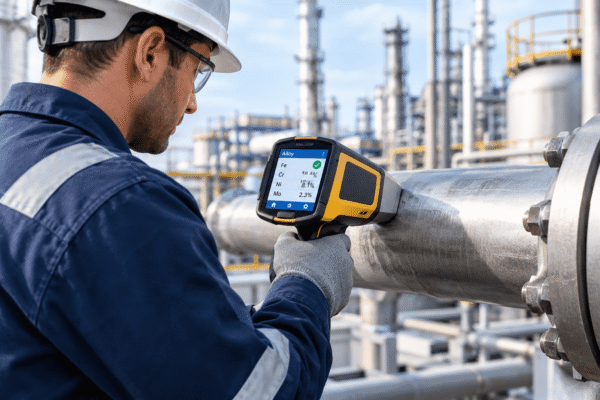
The test is commonly performed using portable analyzers that quickly identify the presence and concentration of alloying elements such as:
- Iron (Fe)
- Chromium (Cr)
- Nickel (Ni)
- Molybdenum (Mo)
- Copper (Cu)
- Titanium (Ti)
- Vanadium (V)
- Cobalt (Co)
- Tungsten (W)
- Manganese (Mn)
Accurate material identification helps prevent incorrect material installation, which could otherwise compromise the integrity and safety of industrial systems.
Why PMI Testing Is Critical for Industrial Safety
Material verification is one of the most important aspects of industrial quality control. Even minor differences in alloy composition can significantly affect corrosion resistance, strength, toughness, and heat resistance.
Prevents Material Mix-Ups
Many alloys appear identical but have different chemical compositions and performance characteristics. PMI confirms the correct material before installation.
Reduces Equipment Failure
Incorrect materials may crack, corrode, deform, or fail prematurely when exposed to demanding operating conditions.
Protects Workers
Ensuring the correct alloy is used reduces the likelihood of catastrophic failures that could endanger personnel.
Supports Regulatory Compliance
Many industries require documented material verification to comply with quality standards and regulatory requirements.
Improves Product Reliability
Verified materials perform as intended, increasing equipment lifespan and reducing maintenance costs.
How PMI Testing Works
PMI testing is a straightforward process that provides rapid and accurate material verification.
Step 1: Surface Preparation
The test area is cleaned to remove coatings, rust, dirt, oil, or contamination that could affect results.
Step 2: Analyzer Placement
A handheld analyzer is positioned directly against the metal surface.
Step 3: Elemental Analysis
The analyzer measures the elemental composition of the material within seconds.
Step 4: Grade Verification
The measured composition is compared with the specified alloy grade or project requirements.
Step 5: Documentation
Results are recorded and included in inspection reports for quality assurance and traceability.
Common PMI Testing Methods
X-Ray Fluorescence (XRF)
XRF analyzers use X-rays to identify alloying elements without damaging the material.
Advantages include:
- Fast analysis
- Portable equipment
- Excellent alloy identification
- Minimal surface preparation
Optical Emission Spectroscopy (OES)
OES uses an electrical spark to analyze elemental composition.
Benefits include:
- Higher accuracy for certain elements
- Carbon analysis capability
- Suitable for critical alloy verification
Equipment Used for PMI Testing
Professional PMI inspections commonly use:
- Portable XRF analyzers
- Optical Emission Spectrometers
- Calibration standards
- Surface preparation tools
- Inspection software
- Data logging systems
- Identification labels
- Reporting systems
Materials That Can Be Tested
PMI testing is suitable for a wide variety of metals and alloys, including:
- Carbon steel
- Stainless steel
- Duplex stainless steel
- Super duplex stainless steel
- Nickel alloys
- Titanium alloys
- Copper alloys
- Aluminum alloys
- Cobalt alloys
- High-temperature alloys
- Tool steels
Industries That Depend on PMI Testing
Many industries rely on PMI testing to maintain safe and reliable operations.
Major sectors include:
- Oil and Gas
- Petrochemical
- Chemical Processing
- Power Generation
- Mining
- Aerospace
- Marine
- Automotive
- Structural Steel Fabrication
- Pharmaceutical Manufacturing
- Food Processing
Pulp and Paper
Pressure Vessel Manufacturing
Organizations seeking NDT Services in Canada often include PMI testing as a key part of their quality assurance and asset integrity programs.
Applications of PMI Testing
PMI testing is commonly performed on:
- Pipelines
- Pressure vessels
- Heat exchangers
- Storage tanks
- Welds
- Pipe fittings
- Valves
- Flanges
- Pumps
- Boilers
- Turbines
- Structural steel
- Industrial machinery
- Fabricated components
Benefits of PMI Testing
PMI testing provides numerous advantages for industrial operations.
Improved Safety
Verifies that critical equipment is manufactured from the correct materials.
Reduced Downtime
Identifies incorrect materials before they cause operational failures.
Accurate Alloy Identification
Confirms chemical composition with high accuracy.
Non-Destructive
Testing does not damage or weaken the component.
Fast Results
Portable analyzers provide results within seconds.
Better Quality Control
Supports manufacturing consistency and product quality.
Regulatory Compliance
Helps satisfy customer specifications and industry codes.
Cost Savings
Prevents expensive repairs, replacements, and production interruptions.
PMI Testing vs Other Material Verification Methods
| Method | Chemical Composition | Non-Destructive | Speed |
| PMI Testing | Excellent | Yes | Fast |
| Laboratory Chemical Analysis | Excellent | Usually No | Slow |
| Visual Identification | Poor | Yes | Fast |
| Material Certificates | Indirect | Yes | Immediate |
| Hardness Testing | Limited | Generally Yes | Moderate |
Industry Standards and Compliance
PMI testing is commonly performed in accordance with internationally recognized standards and customer specifications, including:
- ASTM standards
- ASME Boiler and Pressure Vessel Code
- API requirements
- ISO quality management standards
- Customer project specifications
Following these standards helps ensure traceability, consistency, and compliance throughout the inspection process.
Choosing the Right PMI Inspection Provider
Selecting a qualified inspection company is essential for obtaining accurate and reliable results.
Consider a provider that offers:
- Certified inspection professionals
- Modern XRF and OES equipment
- Comprehensive reporting
- Industry experience
- Fast response times
- On-site inspection capabilities
- Compliance with recognized standards
Businesses requiring PMI Testing Services Surrey BC can benefit from experienced inspectors who verify alloy composition for critical industrial components before installation or operation.
Companies seeking Alloy Verification Services Canada can improve quality assurance by confirming that materials meet engineering specifications and regulatory requirements.
Organizations responsible for critical assets often rely on Material Identification Testing BC to reduce the risk of material mix-ups, improve operational reliability, and support long-term equipment performance.
Conclusion
Positive Material Identification (PMI) Testing is an essential part of industrial safety and quality assurance. By verifying the chemical composition of metallic materials, PMI helps prevent costly material mix-ups, improves equipment reliability, supports regulatory compliance, and protects personnel working in demanding industrial environments.
As industries continue to prioritize safety, efficiency, and asset integrity, PMI testing remains one of the most valuable non-destructive testing methods available. Incorporating regular material verification into manufacturing, fabrication, maintenance, and inspection programs helps ensure that every critical component performs as intended throughout its service life.
Contact Us
Contact us today to schedule an inspection, request a quote, or learn how our PMI testing solutions can help improve safety, quality assurance, regulatory compliance, and long-term equipment reliability.
Frequently Asked Questions About PMI Testing
What is PMI testing?
PMI testing is a non-destructive method used to verify the chemical composition of metal alloys and confirm that the correct material has been used.
Why is PMI testing important?
It helps prevent material mix-ups, improves safety, reduces equipment failures, and supports compliance with engineering specifications.
Which industries commonly use PMI testing?
Oil and gas, petrochemical, aerospace, power generation, mining, manufacturing, marine, and chemical processing industries frequently use PMI testing.
Is PMI testing destructive?
No. Most PMI methods, such as XRF, do not damage the component being tested.
Can PMI identify stainless steel grades?
Yes. PMI testing can distinguish between many stainless steel and alloy grades by analyzing their elemental composition.
How long does PMI testing take?
Portable analyzers typically provide results within a few seconds, making PMI a fast and efficient inspection method.
What equipment is used for PMI testing?
Portable X-ray fluorescence (XRF) analyzers and Optical Emission Spectroscopy (OES) instruments are the most common tools.
Can PMI testing be performed on-site?
Yes. Portable equipment allows inspectors to perform material verification directly at manufacturing facilities, construction sites, refineries, and industrial plants.